Tageskarte (eine Karte)
Eine Karte als Anker für die Absicht des Tages.
Morgens als Erstes nutzen — oder jederzeit, wenn eine klare Einzelaussage gebraucht wird.
Karte ziehenWählen Sie eine Legung. Ziehen Sie die Karten. Erhalten Sie eine Lesung, die zu Ihrer Frage geschrieben ist — kein Standardtext.
Jede Karte wird von derselben Engine gelesen, die unsere Matrix- und Geburtshoroskop-Auswertungen antreibt.
Alle zweiundzwanzig Karten der Großen Arkana ausgelegt — die tiefste Tarot-Lesung, ausschließlich aus den Trümpfen gezogen.
Geeignet für die großen Lebensfragen: Richtung, Wandel, das Muster über Jahre hinweg.
Alle 22 Trümpfe auslegenEine Karte als Anker für die Absicht des Tages.
Morgens als Erstes nutzen — oder jederzeit, wenn eine klare Einzelaussage gebraucht wird.
Karte ziehenDrei Karten, die zeigen, wo Sie waren, wo Sie stehen und wohin es geht.
Wenn etwas in Bewegung ist, der Bogen aber noch nicht erkennbar bleibt.
Sieben Karten, die von vergangenen Einflüssen zu einem wahrscheinlichen Ergebnis führen.
Wenn eine klare Prognose zu einer bestimmten Situation gefragt ist — nicht zum ganzen Leben.
Eine Legung für zwei: wie jede Seite die Bindung sieht, was sie hält, was sie prüft.
Für Partner, Ex-Partner, Familie — oder jeden, dessen Platz im eigenen Leben sich unklar anfühlt.
Die klassische Legung mit zehn Positionen für Situationen mit echter Tiefe.
Für Fragen, die Sie seit Tagen begleiten. Nicht für beiläufige Ziehungen.
A tarot reading is a structured way of looking at a situation. The deck — 78 cards, 22 Major Arcana and 56 Minor — gives you a vocabulary of archetypes. The spread (the shape into which the cards fall) gives each card a position with a fixed meaning. The reader's job is to read the cards in those positions in conversation with each other, and in conversation with the question you brought.
What tarot does not do — despite the cinematic version — is tell the future. The cards describe the energies present in the situation right now and the directions they tend toward. Two people asking the same question on the same day will pull different cards because the deck is shuffled and the cards are drawn at random; what stays the same across both readings is the discipline of looking at the question in the structured frame the spread provides.
Good questions are open. “Will I get the job?” is a closed question — yes or no answers are exactly what tarot does poorly. “What is the texture of the role I am about to step into?” or “What energy does my current situation around work want me to attend to?” are open questions. The cards in the spread will lay out the texture; the closed question would have collapsed that texture into a verdict that the cards do not have the structure to give.
If you find yourself wanting yes/no answers, pull a single card and read it for what it is, rather than for what you wanted it to say. The single-card daily draw is the dictionary's training wheel for exactly this — small enough that the temptation to over-read is reduced.
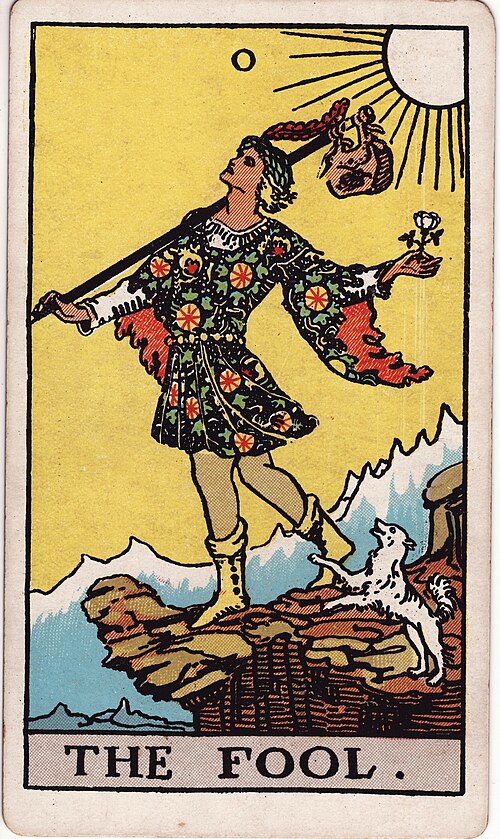
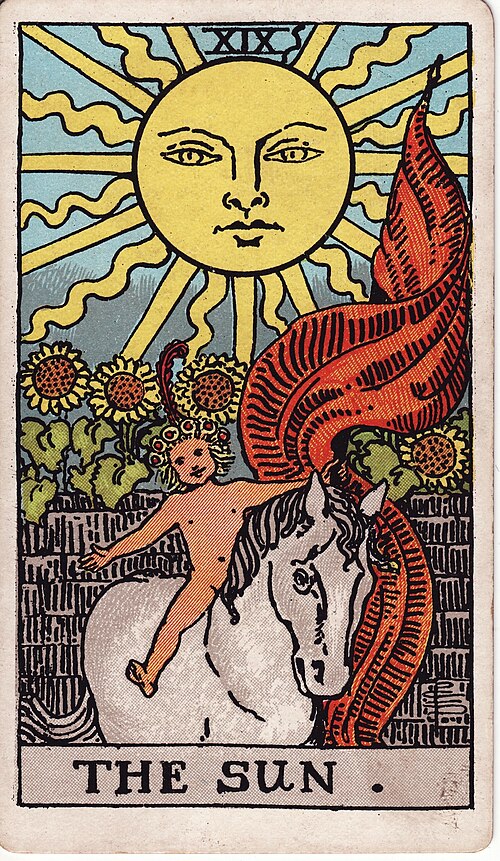
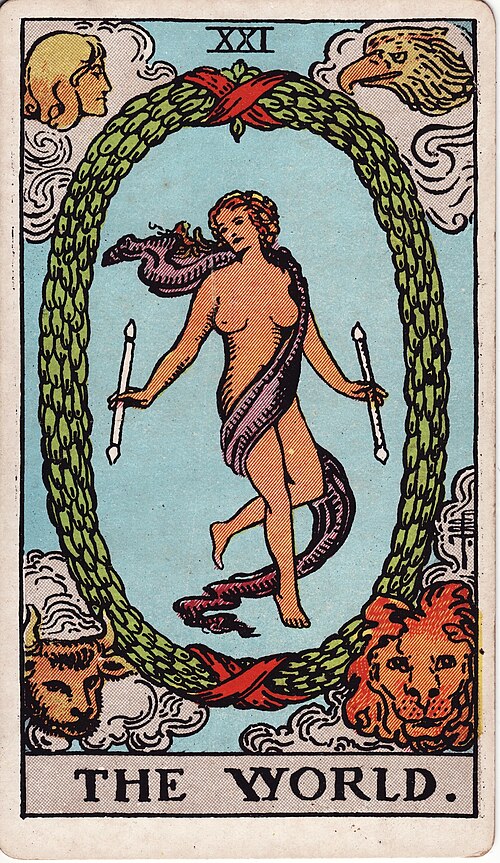
The 22 Major Arcana — The Fool through The World — are the deck's life-pattern cards. They describe phases, archetypes, and the bigger themes a situation is being read inside. When the majors dominate a spread, the dictionary's convention is to treat the reading as describing something structural in the dreamer's life, not a single event.
The 56 Minor Arcana — Wands, Cups, Swords, Pentacles — handle the day-to-day. Each suit has its own domain: Wands for energy and action, Cups for emotion and relationship, Swords for thought and conflict, Pentacles for material and money. When the minors dominate, the reading is more practical — about specific decisions and weeks, not life chapters.
A balanced spread mixes both. The Major Arcana tells you which chapter you are in; the Minor Arcana tells you what to do this week.
Tarot on this site is read by a single engine that powers our Matrix, Natal chart, and Dream Dictionary as well. The interpretations are written by humans, stored as fixed text, and matched to your draw deterministically — same card in same position in same spread always reads the same. No AI is in the loop generating prose on the fly; the writing is the work, not the algorithm.
The shuffle uses a real cryptographic random source; we do not bias the deck toward dramatic readings. We do not optimise for engagement at the cost of accuracy — a quiet reading that says nothing dramatic is a valid reading. Most of them are.
Hinweis: Nur zur Unterhaltung und Selbstreflexion. Kein Ersatz für professionelle Beratung.